

In A Nutshell
Tears might be a welcome relief from eye irritants or an unwelcome proof of an emotion we’d rather keep to ourselves. Different types of tears not only serve different purposes, but they’re made up of different substances. Basal tears are constantly keeping our eyes wet and protected, while emotional tears appear to carry extra hormones — a finding the American Academy of Ophthalmology says still needs replicating. Men who sniff women’s emotional tears do show a measurable drop in testosterone, though that tells us about tears as a signal to other people, and not about what a good cry does for the crier. And reflex tears, which happen in response to some outside irritant, may carry more of the antibodies that help keep our delicate eyes healthy.
The Whole Bushel
We all do it, even if we don’t all want to admit it. Everyone cries, whether it’s while watching a sad movie, attending a funeral, peeling onions, or maybe feeling like it’s all just too much for today. In fact, we’re all crying just a little bit all the time, we just don’t notice as much as we do when we find ourselves crying the more obvious types of tears.
The tears that we’re crying all the time are called basal tears. Produced by our lacrimal glands, they’re constantly dripping into our eyes and flushed away through tiny drainage holes called lacrimal puncta, which carry the fluid down into the nose. These tears are there to protect our eyes from dirt and debris as well as to make sure the surface layer is kept clear. When all is well with basal tears, we don’t even know that they’re there. What they leave on the eye is a film with three parts. An oily outer layer slows evaporation, a thick watery middle does the hydrating, and a mucus layer sticks the whole thing to the eye.
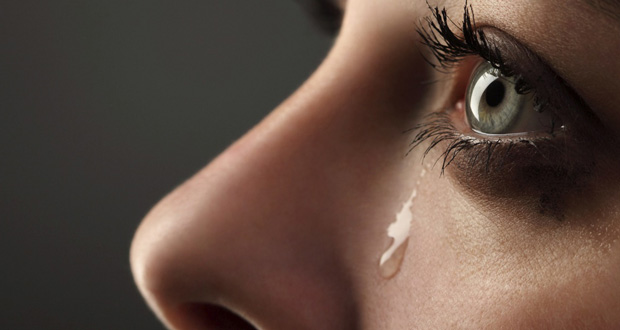
There’s also one of the most notorious types of tears—emotional tears. These are, of course, the kind of tears that are cried when we’re upset, in pain, or even incredibly happy. The makeup of these tears may well be different from other types of tears; researchers have reported higher levels of hormones like ACTH, which is involved with the regulation of stress in the body, along with prolactin, potassium and manganese. The tempting story that follows is that crying is part of our body’s emergency response system, there to help re-balance our mood by flushing some extra hormones out of the body. These tears have also been reported to contain enkephalin, which is a sort of all-natural painkiller that might have something to do with why we tend to feel a sense of emotional relief after we’ve had a really good cry.
That is where the confident version of this story should stop. The American Academy of Ophthalmology lists those same hormones and then says plainly that the findings are preliminary and still need further scientific replication. The chemistry they rest on goes back to William Frey’s tear samples in 1981 and has never really been pinned down since. A pilot study published in 2025 ran emotionally stimulated tears through a modern protein analysis, turned up 907 proteins, and found the emotional and ordinary samples mostly alike, with 52 proteins showing up in richer amounts in the emotional ones. Its authors called the result exploratory and said it needs validating in bigger groups. Crying researchers are cooler still on the catharsis part. A 2018 review by Lauren Bylsma and colleagues suggested that crying’s direct effects on the crier may be very limited at best. Whether you feel better afterward depends mostly on how the people around you respond. Bylsma’s own work found that criers felt better when someone supported them while they cried.
It’s also been found that emotional tears have another effect—a decrease in libido. A 2011 experiment by researchers at the Weizmann Institute exposed male volunteers to the scents, both detectable and non-detectable, from tears that had been cried by female volunteers watching a sad movie. In spite of tears being odorless and absolutely indistinguishable from saline solution, men who were asked to smell samples of the clear liquid and then rate the attractiveness of members of the opposite sex were shown to react much, much less favorably to a pretty face after they’d smelled tears.
It wasn’t just an emotional thing, either; physiologically, the men demonstrated decreased levels of testosterone when they were smelling the tears, supporting the long-held but never-proven idea that there’s something about emotional tears that includes a chemical signal that alerts others to emotional or physical distress.
That finding has travelled better than the tear chemistry has. An independent group repeated the testosterone result in 2012. When another team reported in 2016 that it could not reproduce the attractiveness half of the experiment, the original lab reanalysed their raw data and said the effect was in there after all. In 2023 the same Weizmann group took it further. Men who sniffed women’s emotional tears while playing a game rigged to provoke them behaved 43.7 percent less aggressively, and brain imaging showed the regions that light up when you get angry responding less.
Reflex tears are another type of tear that our eyes are capable of producing. These are the ones that happen when you get dust or dirt in your eyes, or you’ve been peeling onions. The eyes produce these tears in greater quantities, and the American Academy of Ophthalmology says they may carry more of the antibodies that protect the eye from germs or bacteria dropped there by irritants. That protection isn’t theirs alone, though. Lysozyme and lactoferrin are sitting in the ordinary tear film all day long, and their levels hold fairly steady from one type of tear to the next.
Three types is the usual count, but plenty of eye researchers make it four. The fourth is closed eye tears, the fluid you can collect off the eye right after sleep. It picks up proteins that leak from blood vessels in the eyelid lining while your lids are shut.
One popular question has barely been studied at all. Almost every chemistry finding that gets quoted compared emotional tears against irritant tears. Whether happy tears differ from sad ones is a separate question, and hardly anyone has asked it. One small study in 2023 did, running tears from 12 volunteers watching happy and sad films through a metabolite screen, and it did tell the two apart. Twelve people is a pilot, though, nobody has repeated it, and its authors called the work preliminary themselves. So if your tears feel different at a funeral than at a wedding, the science is barely underway.
Some tears are just one part of what’s going on in our body when they happen, and they can be associated with a whole host of other effects. Emotional tears might be accompanied by an increased heart rate and a tightening in your throat, but not all types of tears trigger this reaction.
Tears also look pretty incredible under a microscope, no matter what type they are. Photographer Rose-Lynn Fisher got interested in the microscopic appearance of tears after a few difficult years in which she shed a lot of her own, and the results are stunning. When tears dry, they form some pretty amazing patterns that are reminiscent to something you might see freezing on your window during a snowstorm or anywhere on Google maps. Her Topography of Tears is an art project and not an experiment, which is worth knowing before you read anything into the shapes. As Smithsonian pointed out, two emotional tears with the exact same chemistry can dry into completely different shapes. Fisher puts it down to how many variables are in play — the chemistry and viscosity of the drop, how fast it evaporated, the setting it dried in, and the settings on the microscope. The pictures are beautiful. They can’t tell you which kind of tear you’re looking at.
Show Me The Proof
TED: Why do we cry?
Phys.org: Scientists discover a chemical signal in human tears
The Independent: Why do we cry? The science of tears
Smithsonian: The Microscopic Structures of Dried Human Tears (Includes photography by Rose-Lynn Fisher)
American Academy of Ophthalmology: All About Emotional Tears
American Academy of Ophthalmology: Facts About Tears
Cleveland Clinic: What Are Tears?
StatPearls: Biochemistry, Tear Film
Bylsma, Gračanin and Vingerhoets: The neurobiology of human crying
A Comparison of Emotionally Stimulated and Conventionally Collected Tears
PLOS Biology: A chemical signal in human female tears lowers aggression in males
Revisiting the revisit: added evidence for a social chemosignal in human emotional tears
Cureus: Distinct Metabolic Profiles Between Positive and Negative Emotional Tears
