

In A Nutshell
After World War II, the Allied forces prosecuted certain Nazi leaders of the Third Reich for their war crimes in the famous Nuremberg trials. At the urging of several US medical societies, prosecutors permitted psychological evaluations and testing of the defendants. So far, no one has been able to prove that the Nazi leaders were significantly different from an average person. There isn’t a so-called Nazi personality that explains what happened or ensures that another Nazi culture is not possible.
The Whole Bushel
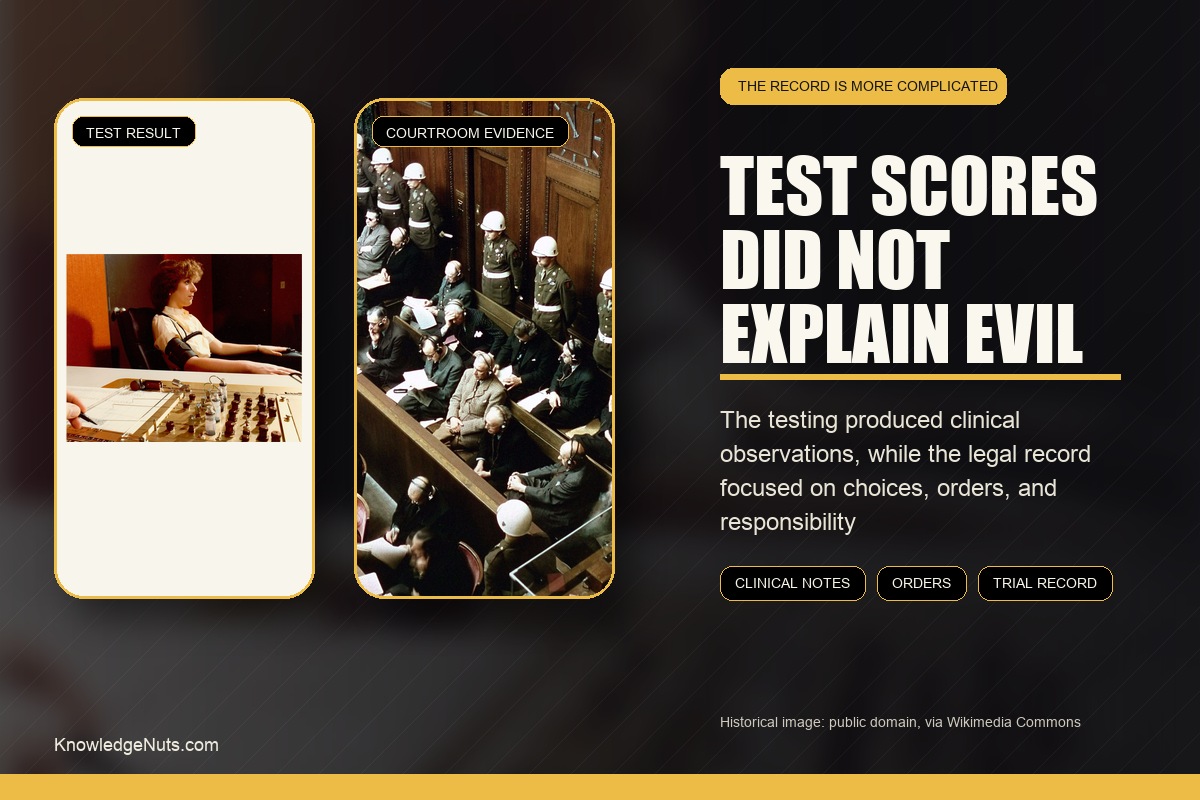
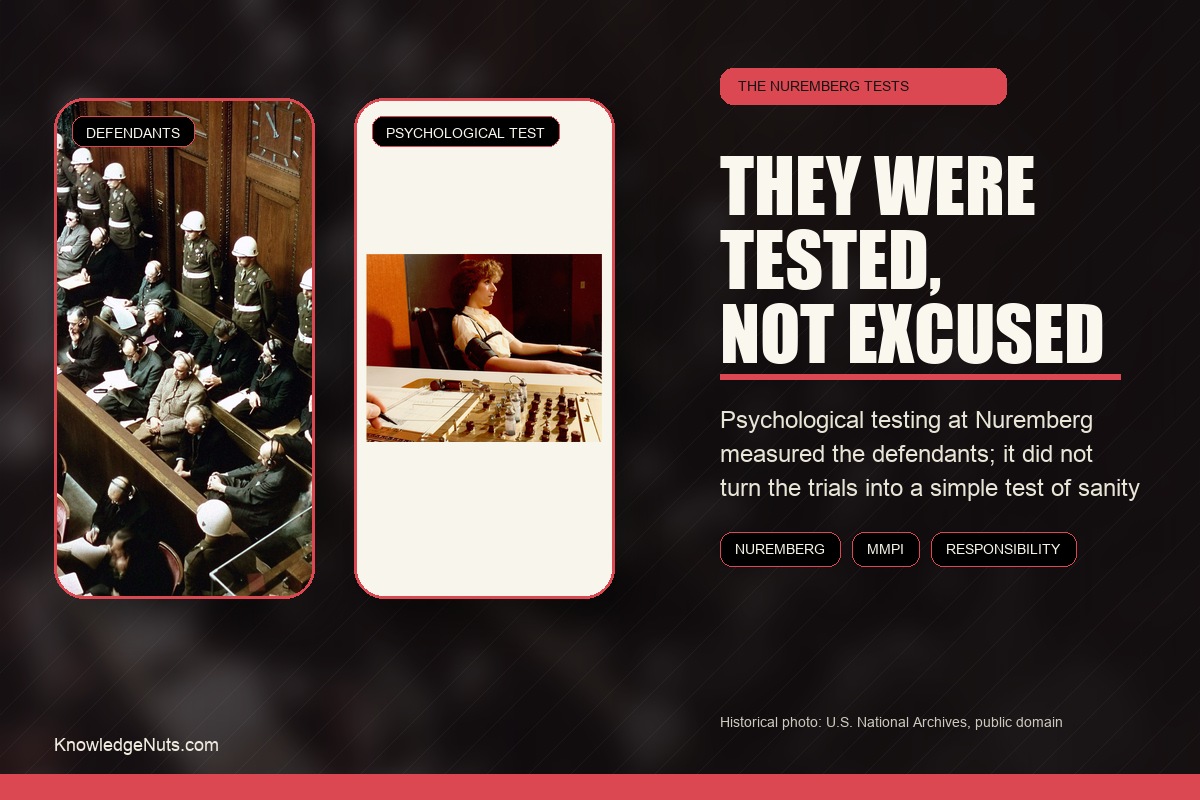
After World War II, the Allied forces prosecuted certain Nazi leaders of the Third Reich for their war crimes in the famous Nuremberg trials. However, the trials were less about whether the Nazis had carried out the crimes (we know they did) and more about why they had committed such atrocities. Was there a specific Nazi psyche or mental illness that drove these men to act as they did? Or were they ordinary people who committed heinous crimes simply because their superiors ordered them to do so?
At the urging of several US medical societies, prosecutors permitted psychological evaluations and testing of the defendants. Members of these medical societies also asked that the Nazis be executed in a manner that preserved their brains for autopsy. However, guilty defendants were executed by hanging, with their bodies cremated afterwards.
Two Americans working at the prison, psychologist Gustave Gilbert and psychiatrist Douglas Kelley, were asked to conduct the psychological evaluations of the prisoners. They administered the Rorschach inkblot test, the thematic apperception test, and the Wechsler-Bellevue intelligence test (an IQ test translated into German). The results didn’t factor into the trials because the court never ordered the tests. But the scientists were fascinated by what the results might reveal about the prisoners’ psyches and intelligence.
Gilbert and Kelley were at odds with each other, which kept the Rorschach test results of 21 Nuremberg prisoners from being published at that time. Surprisingly, the Nazis were eager to be evaluated because they believed the results might prove they were the superior race. It was also a diversion from the constant boredom of solitary confinement. On the IQ tests, they competed fiercely with each other. If one of them gave an incorrect answer, he wanted a do-over. Their mean IQ of 128 placed them in the “Superior” to “Very Superior” range. Hermann Goering scored 138 and was pleased with himself until he learned that Hjalmar Schacht (143) and Arthur Seyss-Inquart (141) had both outscored him, after which he dismissed the test as unreliable. Regardless of their morality, many of these men were highly educated. The Americans in charge weren’t happy with the IQ test results and refused to publicize them at the time.
When the testing was over, both Gilbert and Kelley declared that all the prisoners were legally sane. However, they disagreed on the interpretation of the data. Gilbert believed that the Nazis’ psychopathic personalities caused them to commit their atrocities. He concluded that the Nazi culture of deferring to authority was so strong that it dominated all other factors of intelligence and reason. As a way to avoid such catastrophic blind obedience in the future, his recommendation was that democratic leaders should be taught to think critically.
On the other hand, Kelley thought the Nazis were a product of a “socio-cultural disease,” rather than the direction of insane leaders. He did not believe that psychopathic personalities were to blame for the Nazis’ actions. As a result, Kelley thought that a Nazi-type government could even exist in the US under the right circumstances. Ironically, on New Year’s Day in 1958, Kelley killed himself with cyanide, the same poison Hermann Goering had used at Nuremberg to cheat the hangman. Whether Kelley meant to echo Goering is still debated.
Since Gilbert and Kelley published their findings, other psychology professionals have tried to objectively evaluate the Nazis’ test results. Molly Harrower pooled the Rorschach records in the 1970s, and years later the psychiatrist Joel Dimsdale went back over the same men. Neither found a single shared abnormality that set the group apart. As of 2026, no one has been able to prove that the Nazi leaders were significantly different from an average person. There isn’t a so-called Nazi personality that explains what happened or ensures that another Nazi culture is not possible. According to other test results, ordinary rank-and-file Nazis didn’t have particularly violent personalities. But they weren’t independent thinkers, either. So they did as they were told and denied responsibility, both legal and moral, for their actions. That same question, monsters or ordinary men following orders, took on its most famous name at a later trial. Watching Adolf Eichmann in Jerusalem in 1961, the philosopher Hannah Arendt called what she saw the banality of evil, and scholars have argued over the phrase ever since.
At Nuremberg, Gilbert interviewed Rudolf Hoss, the Commandant of Auschwitz, who admitted responsibility for the deaths of over 2.5 million Jews when he ran the day-to-day operations of the camps. He was coolly analytical about why he murdered so many people. “I am entirely normal,” said Hoss. “Even while I was doing the extermination work, I led a normal family life . . . I was obeying orders, and now, of course, I see that it was unnecessary and wrong. But I don’t know what you mean by being upset about these things because I didn’t personally murder anybody. I was just the director of the extermination program at Auschwitz. It was Hitler who ordered it through Himmler and it was Eichmann who gave me the orders regarding transports.” The figure Hoss gave at Nuremberg was his own estimate, which he later called far too high. Historians now put the number of people killed at Auschwitz at around 1.1 million.
In 1947, Hoss was hanged beside the former crematorium at the Auschwitz concentration camp.
Show Me The Proof
Featured photo via Wikipedia
Discover: Rorschach Tests at the Nuremberg Trials
American Psychological Association: In search of the Nazi personality
Cabinet: Bats and Dancing Bears: An Interview with Eric A. Zillmer
The Daily Beast: Inside the Nazi Mind at the Nuremberg Trials
United States Holocaust Memorial Museum: Auschwitz
