

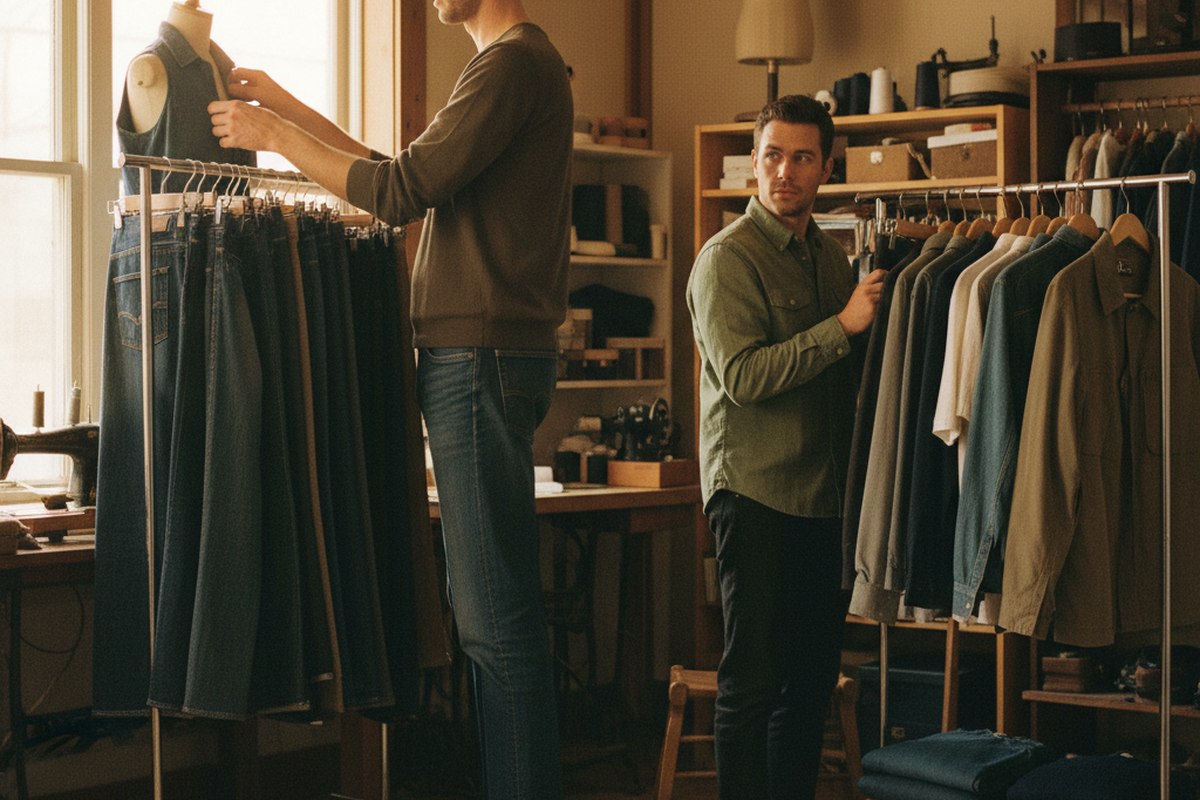
Regular and tall sizes are usually the same fit at the chest, waist, and hip. The difference is length. Regular sizes are cut around the height range a brand assumes, often about 5’4″-5’8″ or 5’9″ for women and 5’8″ or 5’9″ to 6’1″ for men.
Tall sizes add length through the torso, sleeves, and inseam for taller customers, often women 5’10” and up and men 6’2″ and up, without changing the chest or waist measurement.
Petite sizes work the same way in the opposite direction. They remove length for shorter wearers. The width measurements stay constant; only the height-related dimensions move.
The practical questions are which lengths change, who benefits, and when regular sizing is still fine.
What regular sizing assumes
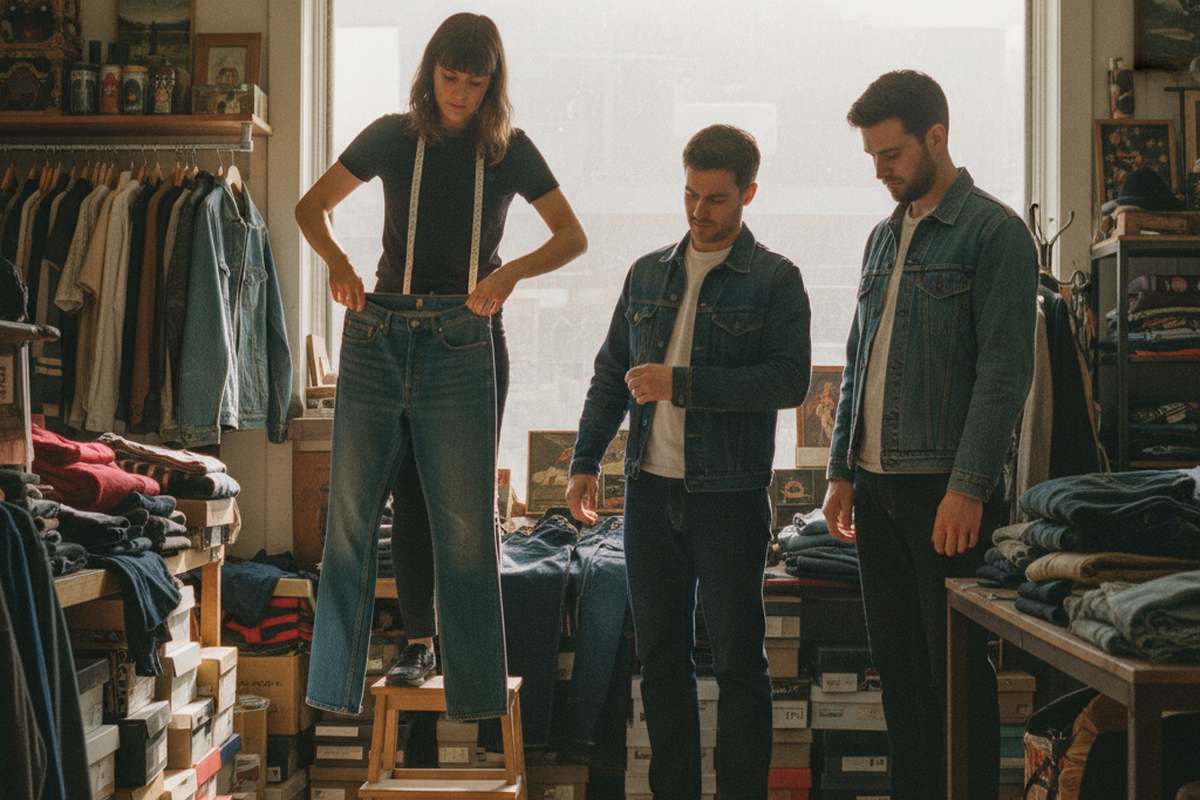
When a US brand sizes a garment as “regular” or just doesn’t specify, it is cutting for an assumed average height. Most US women’s brands target 5’4″-5’8″ as the regular fit window. Most US men’s brands target 5’9″-6’1″. Within that range, sleeves, torso, and inseam are cut to lengths that suit the typical body proportions of those heights.
The width measurements (chest, waist, hip) are independent of height in regular sizing. A women’s size 8 regular has the same waist measurement as a women’s size 8 petite or size 8 tall. What changes is the length of the garment, not how much it goes around.
What “tall” adds
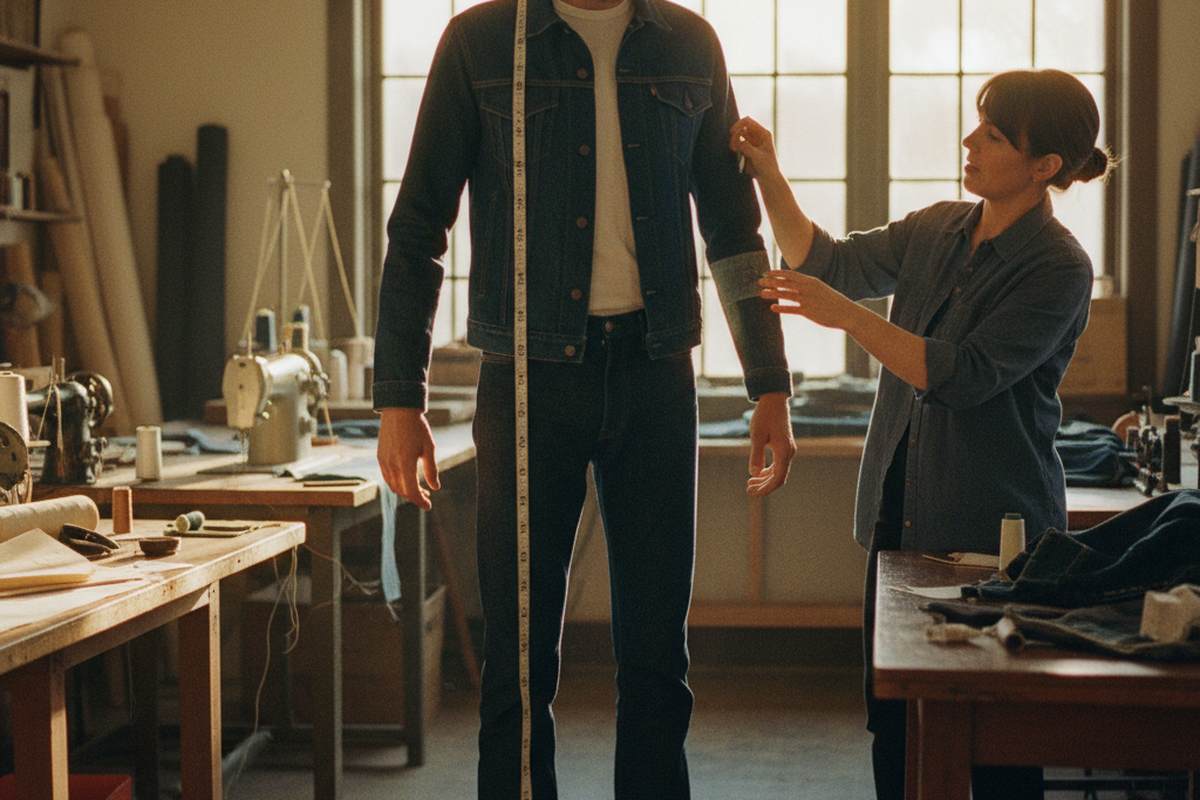
Tall sizes generally add length in three places: torso, sleeves, and inseam. The exact added length varies by brand, but typical adjustments look like this:
- Torso: +1 to +2 inches longer through the body of a top, dress, or jacket
- Sleeves: +1 to +1.5 inches longer at the wrist
- Inseam: +2 to +4 inches longer in pants, often with rises adjusted as well
American Tall is one of the few US brands built only around tall clothing, and its sizing shows why inseam alone is not enough. Shoulder slope, chest pocket position, pant rise, and underbust placement on women’s tops all need to move with the taller body so the garment stays proportionate.
Some brands simply add inches to the bottom of the inseam without rebalancing the other length points. The result fits the leg long but looks off through the body. The hem position, pocket location, and waistline all end up at the wrong height for the wearer.
Who tall sizes fit
Most brands target tall women at 5’10” and above and tall men at 6’2″ and above. Within those starting points, the sub-categories vary:
- 5’10”-6’0″ women: most tall sizes fit well; some pieces still feel slightly short
- 6’0″-6’2″ women: tall is the right category; some specialty tall brands offer “extra tall”
- 6’2″-6’4″ men: standard tall fits well
- 6’4″ and above (men or women): standard tall is often still short; specialty extra-tall or custom is needed
A 5’8″ or 5’9″ woman is in the gray zone between regular and tall. Many can wear regular tops fine but need tall pants. Hockerty, American Tall, and other specialty tall brands tend to start their sizing at heights where most regular brands fall short. As outlined in Hockerty, the men’s tall threshold of 6’2″ is widely accepted as the height at which a typical regular fit becomes proportionally short rather than just borderline.
Pants: the most common tall need
The shortest path to discovering you need tall sizing is usually pants. A regular pant inseam runs about 30-32 inches. Tall pant inseams typically run 34-36 inches. Customers taller than 5’10” (women) or 6’1″ (men) often find regular inseams hit at the ankle when they should hit the foot.
Tall pants also adjust the rise, the distance from crotch to waistband, and sometimes the thigh shape. A tall man’s pants are a different proportion, not a regular pair with extra fabric at the hem. They sit differently on the hip and have a longer thigh segment between waistband and knee.
Inseam length matters most in:
- Dress pants and trousers, where the hem position is part of the formal look
- Jeans, where the cuff height changes how the leg reads
- Athletic pants and joggers, where ankle-length cuffs need to reach the ankle
Tops and dresses: the underrated tall need
Tall tops matter more than many shoppers expect. A taller torso means a regular top often hits at the wrong point on the hip. It can be too short for tucking, too short for layering, and too short for the wearer’s proportions.
For dresses, the same logic applies more dramatically. A regular knee-length dress on a 5’11” woman often becomes mid-thigh instead of knee-length, because the dress is cut for a torso 2-3 inches shorter. A tall version of the same dress hits at the intended point on the leg.
Sleeves are the third underrated dimension. Regular long sleeves on a tall person often come up short of the wrist. Most tall lines add about an inch to long-sleeve and three-quarter-sleeve garments to keep the same proportional cuff position.
Where to find tall sizing
Tall sizing is more available now than 10 years ago, but it is still a smaller part of most retailers’ inventory. Places to look:
- Mainline brands with tall extensions: Old Navy, Gap, J. Crew, Banana Republic, Loft, Express, Athleta, Lululemon all sell tall in some categories
- Specialty tall retailers: American Tall, Long Tall Sally (women), Tall Slim Tees (men), 2Tall, Tall Heritage
- Custom and made-to-measure: Hockerty, Indochino, and others let height be specified directly without using a size category
- Workwear and uniform suppliers: Carhartt, Dickies, and similar brands carry tall sizing in their work line
Tall selection varies by brand. Some brands carry tall versions of most of their main line; others offer tall only in categories like jeans or button-downs. Online tall selection is almost always broader than in-store selection because physical retailers rarely stock the full tall range.
Common confusions to clear up
A few things that often get mixed up about tall sizing:
- Tall is not “plus size for tall people.” Tall sizes use the same width measurements as regular. A woman who wears regular size 8 wears tall size 8 — the difference is length, not width.
- Tall and big-and-tall are different. “Big and tall” in men’s clothing combines tall sizing with extra width sizing. A man who is 6’4″ and lean wears tall, not big-and-tall. A man who is 6’4″ and heavy may need big-and-tall.
- Long inseam alone does not equal tall. Some regular pants offer extended inseams (up to 34″) without being tall sizing. The rise, thigh, and overall proportions are still cut for regular height.
- Tall sizing is not the same across brands. A J. Crew tall and a Gap tall add different amounts of length, and the assumption about who fits the size differs.
How to figure out if you need tall
Three quick checks:
- Pants ride above the ankle when standing relaxed: tall inseam needed
- Long-sleeve cuffs sit above the wristbone when arms hang naturally: tall sleeves needed
- T-shirts and tops feel short when reaching overhead: tall torso length needed
A wearer who hits all three is squarely in tall territory. One out of three suggests selectively shopping tall in that one category while sticking with regular elsewhere.
Start with the brand’s own size chart, which usually lists the height window for regular fit. If the wearer’s height falls outside that window by more than an inch or two, the tall version is usually the better fit.
When custom is the better answer
For wearers above 6’4″ (men) or 6’2″ (women), even tall sizing from major brands can come up short. Custom and made-to-measure clothing solves the problem by specifying every length dimension directly rather than relying on a size category.
Custom shirting, suit jackets, and pants typically cost 20%-50% more than off-the-rack equivalents. For very tall wearers, the proportional fit is meaningfully better than what any size category can provide. The tradeoff is delivery time (typically 4-8 weeks) and the upfront measurement session, which sets the spec for all future orders from that brand.
For most tall shoppers, mainstream tall sizing covers the wardrobe gap. For people at the far end of the tall range, custom is usually the only way to get a consistent proportional fit.
