

In A Nutshell
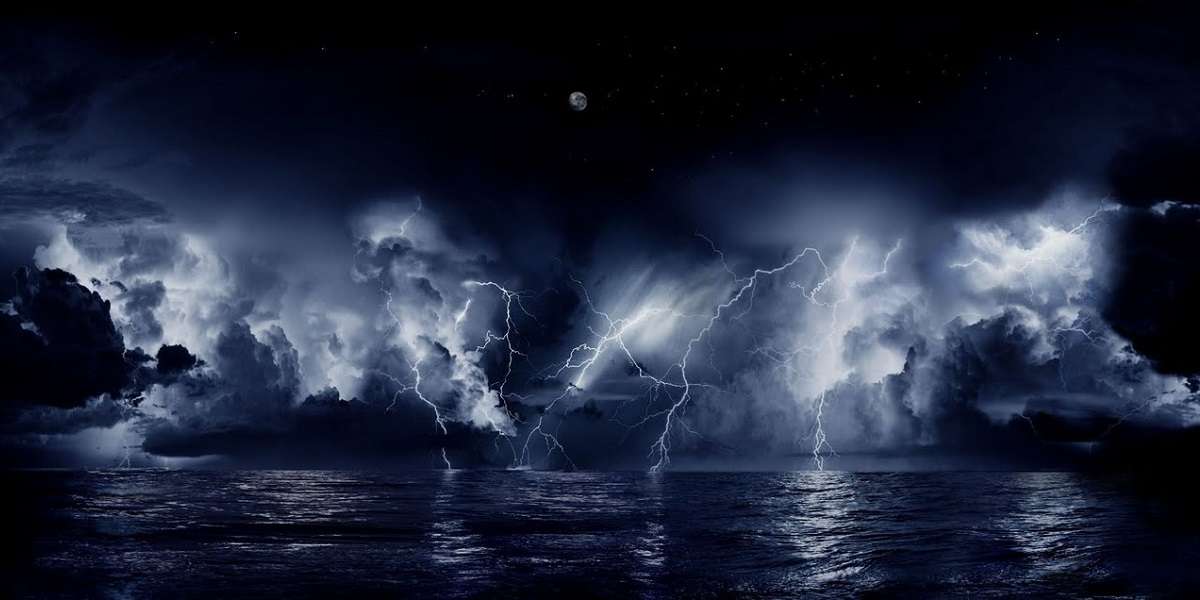
From anywhere between 260 and 300 nights out of any given year, the skies over the Catatumbo River in Venezuela are lit by lightning. And not just any kind of lightning; on average, each nightly storm lasts about 10 hours, and the skies are torn by thousands of lightning bolts each night. The phenomenon has been recorded as far back as the 16th century, and it’s a unique combination of the area’s topography and mixing air currents that cause these nightly storms.
The Whole Bushel


With blatant disregard for the long-told myth that lightning never strikes in the same place twice, a lightning storm has been raging over one area in Venezuela almost every night for hundreds of years. Between 260 and 300 nights a year, storms light up the sky over the Catatumbo River in Venezuela. Each nightly lightning storm rages for nine to ten hours, and there’s so much lightning that area residents take measures to darken the inside of their homes in order to get some sleep.
In an average year, there are about 1.2 million flashes of lightning in the night sky. Thunder accompanies each lightning strike, but the storms are generally high enough up in the atmosphere that those on the ground can’t hear it.
Not surprisingly, the lightning storm has a prominent position in the area’s history. Acting as a natural lighthouse, the storm has been used as a landmark for sailors throughout the nautical history of the country. Guiding friendly ships, it’s also allowed land-based troops to spot potential attackers when they were still miles and miles away. Sir Francis Drake was one of the would-be attackers who had his mission foiled by the lightning.
It was also crucial in naval battles that led to Venezuela’s independence from Spain, for much the same reason.
The cause of this massive lightning storm has long been the subject of much debate. The current theory is that the unique, V-shaped mountain range that surrounds the area presents the right conditions for trapping warm winds coming out of the Caribbean. When cold air coming down off the Andes Mountains drops, lightning storms form along the change in temperature.
Add in the huge amounts of methane that leak into the air from the oil fields below Lake Maracaibo; along with the massive amounts of decaying plant matter and the gases released by that, researchers think that the gas buildup changes the normal conductivity of the air and makes it the perfect place for a prolonged lightning superstorm.
While it’s not a confirmed theory, it’s a likely one that’s supported by the disappearance of the lightning storm when there have been major changes in some parts of the environment; it’s unlikely to be one or two factors, but a convergence of several.
In 1906, the lightning disappeared for three weeks after a major earthquake and resulting tsunami. In 2010, a drought caused by El Niño also led to the temporary halt of the lightning storms. Locals had, worryingly, noticed a lull in the strength of the storms in recent years as well, and said it was most likely because of the deforestation that was happening in the area and the clogging of the river with agricultural runoff.
The lightning came back after several months, but it’s still disturbing evidence on how the natural balance is shifting to disrupt something that has been such a well-documented phenomenon for centuries.
It’s something the planet can ill afford to lose, too. The massive lightning storms put out much more than light and energy: They also form ozone. The change in pressure around a lightning bolt, along with the massive amounts of heat generated, allows oxygen and nitrogen to join together more easily. The two molecules are little more than a reluctant pairing, and sunlight often shakes the atoms loose. But ozone is crucial to the survival of the planet; when it’s high in the atmosphere where lighting storms happen, it helps shield us from harmful rays.
Show Me The Proof
Featured image photo credit: Worlds9thwonder
io9: A place in Venezuela that gets 40,000 lightning strikes per night
Slate: An everlasting lightning storm
The Guardian: Drought extinguishes Venezuela’s lightning phenomenon


