

In A Nutshell
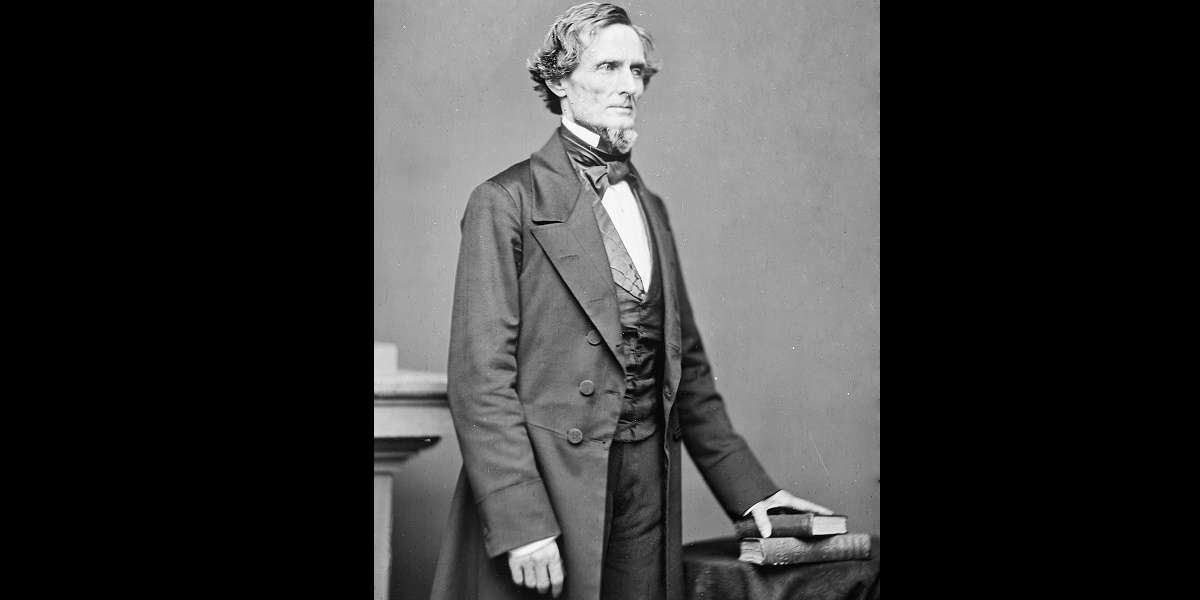
After the Civil War, former Confederate President Jefferson Davis was charged with treason in the US federal court system. However, the Chief Justice of the Supreme Court gave the Davis legal team an interesting argument for dropping the treason charge. By proving that the US had no citizens under the Constitution, Davis couldn’t be tried for treason against the US. His citizenship rights were finally restored in 1978 by President Jimmy Carter.
The Whole Bushel


On April 9, 1865, Confederate General Robert E. Lee surrendered to the Union Army, ending the US Civil War. Former Confederate President Jefferson Davis had already fled the South’s capital in Richmond, Virginia. He wanted to escape to Britain or France, where he might reestablish a government in exile. However, before he could do so, members of the 4th Michigan Cavalry arrested him. At the time he was apprehended, Davis was sporting his wife’s black shawl. The Northern press tried to make him a laughingstock by accusing him of dressing as a woman in a desperate attempt to evade capture. However, Davis and his wife insisted that she had given him the shawl to stay warm for health reasons.
When Davis was indicted on a charge of treason in the federal court system, he stood before US Supreme Court Chief Justice Salmon Chase, who was acting as a circuit judge at the time. Chase preferred to dismiss the treason charges, but another judge, John Underwood, wouldn’t agree to it. Davis’s defense team argued that he had already been punished by the 14th Amendment, which stopped him from serving in public office in the future.
As a former US House and Senate member before the war, Davis had taken an oath of allegiance to support the Constitution of the United States. Under the 14th Amendment, anyone who has taken such an oath and engaged in insurrection against the US cannot hold public office. According to Davis’s lawyers, that inability to hold public office under the 14th Amendment constituted punishment for his rebellious actions. To prosecute him for treason for the same rebellious actions would constitute double jeopardy under the 5th Amendment. Therefore, his lawyers argued, he could not be legally tried for treason.
However, the Chief Justice gave the Davis team another interesting argument for dropping the treason charge. Chase asked if a person could be prosecuted for treason against the US if he were not a US citizen. Clearly, no. Then Chase asked if there was a reference to the concept of a US citizen in the Constitution. Again, there was not. A person could only be a citizen of his state. Therefore, by proving that the US had no citizens, Davis couldn’t be tried for treason against the US. It was a clever argument that has never been used again as far as we know.
Although a deadlocked case in the district court would have automatically gone to the Supreme Court, it ultimately didn’t matter. President Andrew Johnson pardoned everyone who fought for the Confederacy on December 25, 1868, as long as they applied for the pardon. Although former officials of the Confederacy still couldn’t hold office or vote, they were now immune from prosecution for treason. In some circles, there wasn’t much appetite for trying Davis for treason anyway. Officials of the US government were afraid that Davis would prove that the South’s secession had been legal. However, the various amnesty provisions passed at that time never reinstated Davis’s citizenship. His citizenship rights were finally restored in 1978 by President Jimmy Carter.
Show Me The Proof
Featured photo via Wikipedia
This Day in History: Jefferson Davis captured
National Constitution Center: The pardon of Jefferson Davis and the 14th Amendment
500 Little-Known Facts in U.S. History, by George W. Givens


