

In a Nutshell
Top predators possess a range of intimidating adaptations that place a wide range of species in their kill zone. However, dietary adaptation has led to bizarre “defections” among the ranks of carnivorous species. One species of Hyena feeds on massive quantities of tiny insects instead of other mammals, while certain birds of prey have either gone vegan, or developed exceedingly strange dietary habits.
The Whole Bushel


Large predatory mammals and birds of prey are finely adapted to feed on other animals, frequently attacking and eating species bigger than themselves. However, certain species have taken on rather unlikely diets, making them predators more in name that in nature. These species have taken on dietary habits less characteristics of predators, and in fact, more similar to the species hunted by their close relatives.
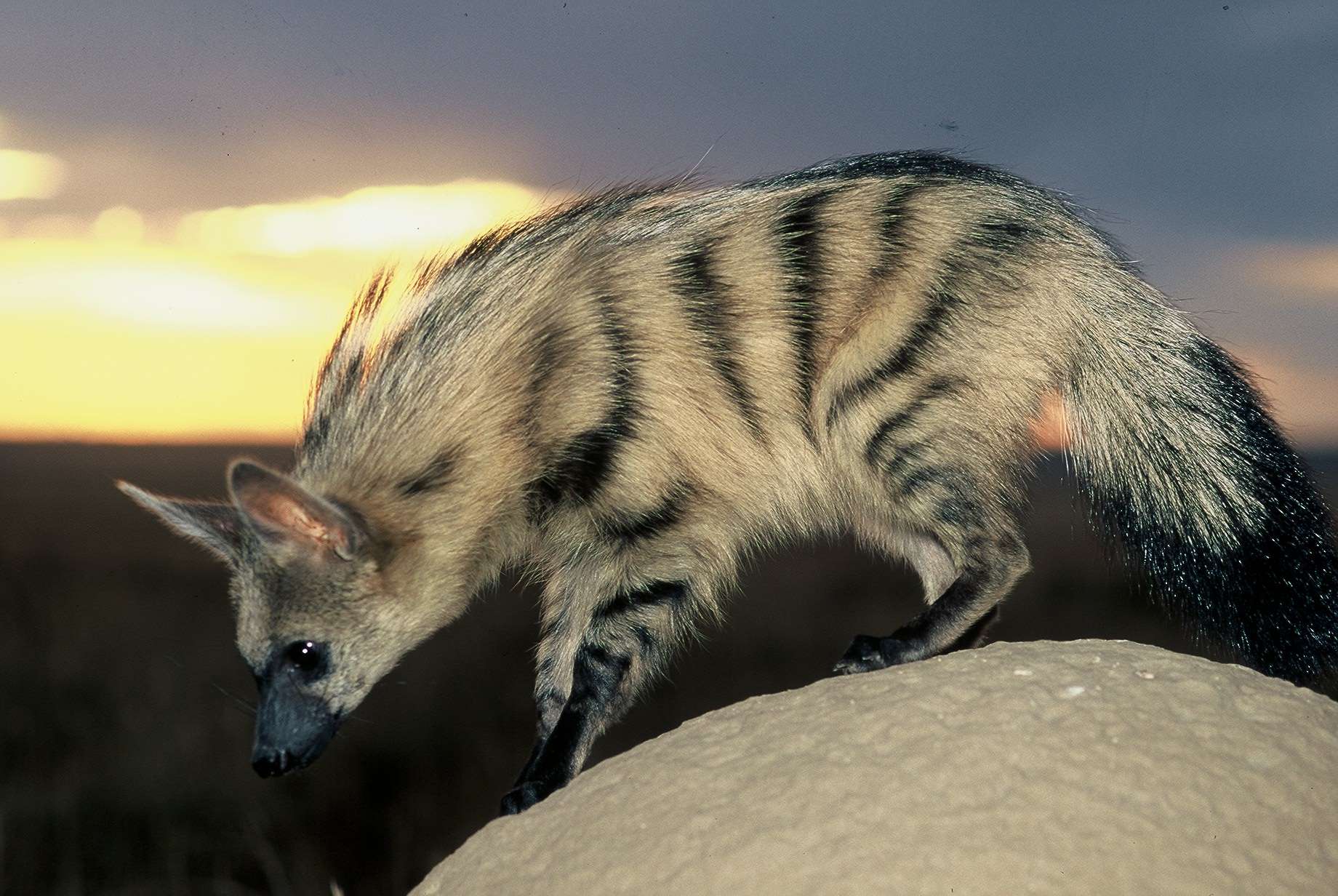
The Aardwolf, Afrikaans for “Earth Wolf” is actually a species of Hyena, a group that ranks among the powerful predators on the African Savannah. While most species will consider a large mammal suitable prey, the Aardwolf feeds almost entirely on ants and termites. The nocturnal Aardwolf may scoop over 200,000 insects in a single evening for a protein serving that equates to a more typical carnivore meal of a single animal.
Predatory birds are not above dietary conversions either. Raptors might normally hunt parrots or feed on carrion, but the perhaps parrot-like Palm Nut Vulture feeds mostly on Oil and Raffia Palm nut husks, despite its close relationship to eagles. Hawks are often fierce hunters of other birds and mammals. However, the European Honey Buzzard is a rather typical looking hawk that is more likely to raid a beehive for bee larvae and bees than engage in a bona fide hunt.
Show Me The Proof
BBC Science and Nature: Aardwolf
Palm Nut Vulture
BBC Nature: Honey Buzzard


