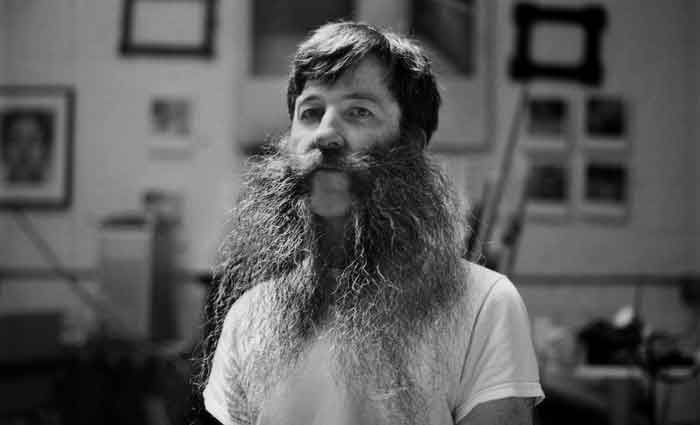
Harry Frederick Harlow is known as one of the best psychoanalysts and behavioral scientists in America. His reputation peaked between the 1950s and the 1960s. As controversial as his experiments were, psychologists and behavioral scientists still consider Harlow’s work revolutionary.
Harlow’s Controversial Experiments
Harlow’s original experiments revolved around his interest in early infancy development, specifically dependence, maternal separation, and social isolation. According to him, the early development of an individual shapes most of their social behaviors. He was determined to turn his theories into facts.


The similarity between humans and primates inspired him to use rhesus monkeys to conduct his experiments. With the help of rhesus monkeys, he would prove that babies have often attached to the caregivers that gave them food for more than just food. Harlow and other social and psychotherapists insisted that feeding’s contact comfort played a more significant role in a child’s healthy development.
As popularly reported, Harlow’s experiments took place in an enclosed laboratory at the University of Wisconsin-Madison. The lab afforded the scientist access to plenty of resources, and his controversial work took flight.
Isolation and Deprivation
Harlow’s first experiment involved isolating and depriving infant monkeys of their mothers and raising them in a lab. The infant rhesus monkeys who were completely isolated from other monkeys showed disturbing behavior. When scientists brought them back to a group of monkeys, they were anti-social and self-sabotaging.
The monkeys continued to isolate themselves to the point of starvation and death. Such results came as a surprise because the monkeys were not entirely isolated at this point. Though in different cages, Harlow kept and fed the rhesus monkeys in the same room.
Compared to the control group, all the infant monkeys denied maternal care presented social awkwardness. They were aloof, and they would cling to their soft cloth diapers. Harlow concluded that their need for comfort and maternal care was the cause of this behavior.
The Surrogate Mother
To further his agendas, Harlow introduced the surrogate mother experiment. The two surrogates used in the experiment were objects. One object was wooden with additional strings of wire, while the other one was soft and made out of cloth and rubber.
In one instance, the mother made out of wire and wood would provide the food. Alternatively, the one made out of soft cloth would also take a turn giving the monkeys food. Harlow observed that the surrogate made out of soft material enticed the infant monkeys. With or without the food, the comfy-clothed surrogate provided comfort.
Harlow’s phenomenal and groundbreaking study proved that maternal care, touch, and comfort are essential tools in infant development. Moreover, the study conducted demonstrated that the infant monkeys were more confident in the presence of a caring maternal figure.
Conclusion
Harlow’s theory demonstrates how a maternal figure influences a child’s self-esteem and responsiveness. Seventy years later, Harlow’s experiment still holds precedent in many psychological studies.