

In A Nutshell
The Rhubarb Triangle refers to a 23-square-kilometer (9 sq mi) stretch of land in West Yorkshire, England between Wakefield, Morley, and Rothwell. At the height of rhubarb’s popularity, the Triangle had 200 separate growers and produced 90 percent of the world’s rhubarb. Today, there are only 12 growers left and they still use the same “forcing” technique that enables the rhubarb plants to grow so quickly you can hear it.
The Whole Bushel


In 1620, a man named Sir Matthew Lister introduced the rhubarb plant (native to Mongolia) to England for the first time, where it was praised for its medicinal qualities. It wasn’t until the 1780s that rhubarb was used in pies as a substitute for other fruits. (In 1947, a judge in the United States declared rhubarb a fruit for tariff purposes; the rest of the world deems it to be a vegetable.) In the early 1800s, the growers of the Rhubarb Triangle developed “forcing,” which enabled them to produce rhubarb in much greater quantities than ever before.
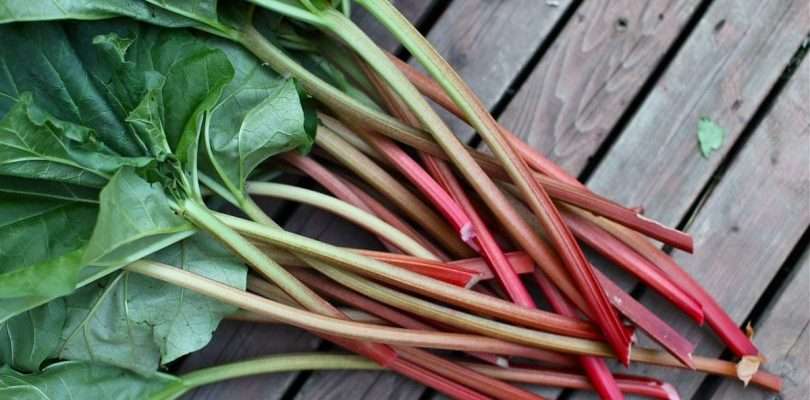
Basically, they allow the rhubarb to grow naturally in a field without harvesting for two years. During this time, the plants are storing energy from the sun in their roots in the form of carbohydrates. After this period, usually in the winter months, the rhubarb is moved into a heated shed which is kept in complete darkness. The supplied heat means they no longer need to use any of their stored energy to make leaves (which turn a sickly yellow-green color), so all of it goes into making the stalk larger (and sweeter).
This “forcing” is so successful that you can actually hear the rhubarb growing if you go into the sheds. The buds cracking open is what makes the sound, and there is said to be a constant creaking during growing season. In addition, the rhubarb has to be gathered in very low light, usually candlelight, because the plants are so sensitive to light the “forcing” would stop.
The stalks can be successfully harvested until the following March, when their root supplies are exhausted and they are turned into compost. Although rhubarb is not as popular as it once was (at one point, it was four times more valuable than opium in England), it is making a comeback as people become more aware of the health benefits it offers.
Show Me The Proof
Secrets of the Rhubarb Triangle
The Rhubarb Triangle
West Yorkshire’s Rhubarb triangle


