In A Nutshell
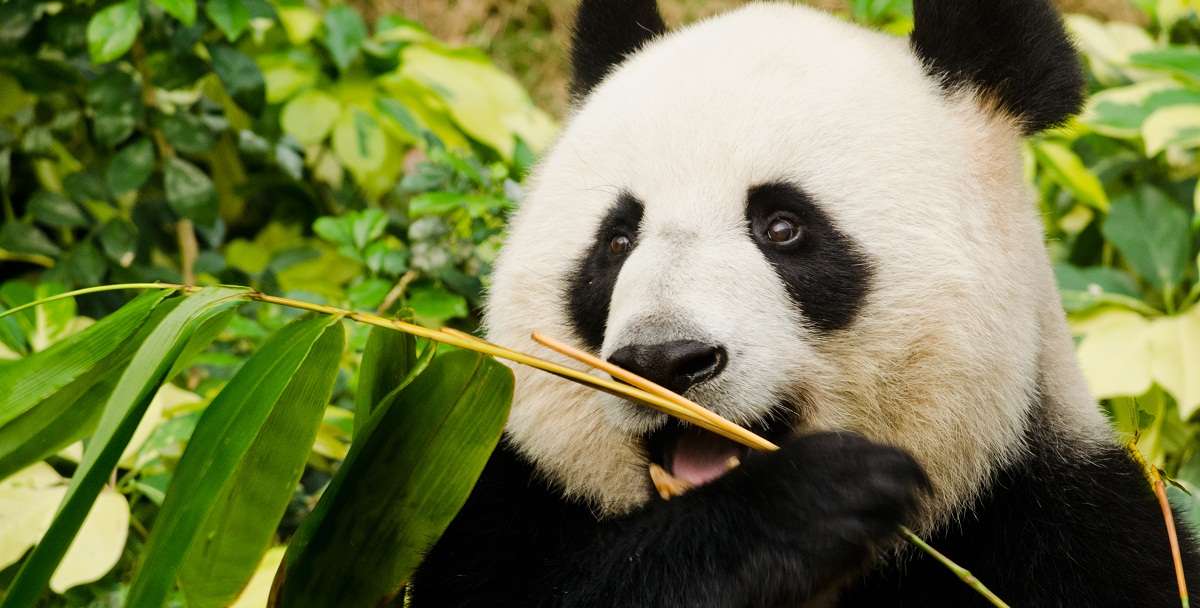
Despite some confusion, tests have proven that the giant panda is genetically a bear (though scientists are still arguing about it). It also has a carnivore’s digestive system, designed for eating meat. However, in the wild, the panda feeds almost exclusively on bamboo. It manages to survive because it hosts an extraordinary set of microbes in its gut that breaks the plant material down.
The Whole Bushel


Especially adorable, pandas are among the world’s most beloved creatures. Although known in their native China since antiquity, the panda has been known in the West for less than 150 years. They have been the subject of much taxonomic confusion over the ensuing decades as they share traits of both bears and members of the raccoon family. However, advances in molecular genetics have determined that it is indeed a member of the Ursidae, or bear family.
Herbivorous mammals such as cows and deer have long, complicated digestive systems with which to draw the energy from plant material. The panda’s digestive system is short, like those of other carnivores. How then is it able to survive on bamboo, a type of grass? Studies have shown that the panda actually has unique microbes in its gut that help to break down the plants into usable energy. The system is so unique that it is being analyzed by scientists as a means of creating more efficient biofuels.
Precisely how and why the panda evolved in this fashion is unknown. One of the more plausible theories is that the panda once maintained a variegated diet like other bears, but competition with more fearsome predators like tigers, leopards, and black bears drove them into the remote mountains, where they were forced to subsist on bamboo. This was probably the first step on the path to functional extinction; pandas are poor breeders, and there are only a handful left between zoos and remote mountain regions of China.
Ed.: We’d like to clarify that the featured quote is, in fact, a joke from O’Doherty’s humorous book of fake panda facts.
Show Me The Proof
How Do Pandas Survive on Bamboo?
Smithsonian: Could Panda Poop Be the Secret to More Efficient Biofuel?
Discovery: The Giant Panda Debate — Bear or Raccoon?
NatGeo: Giant Pandas