In A Nutshell
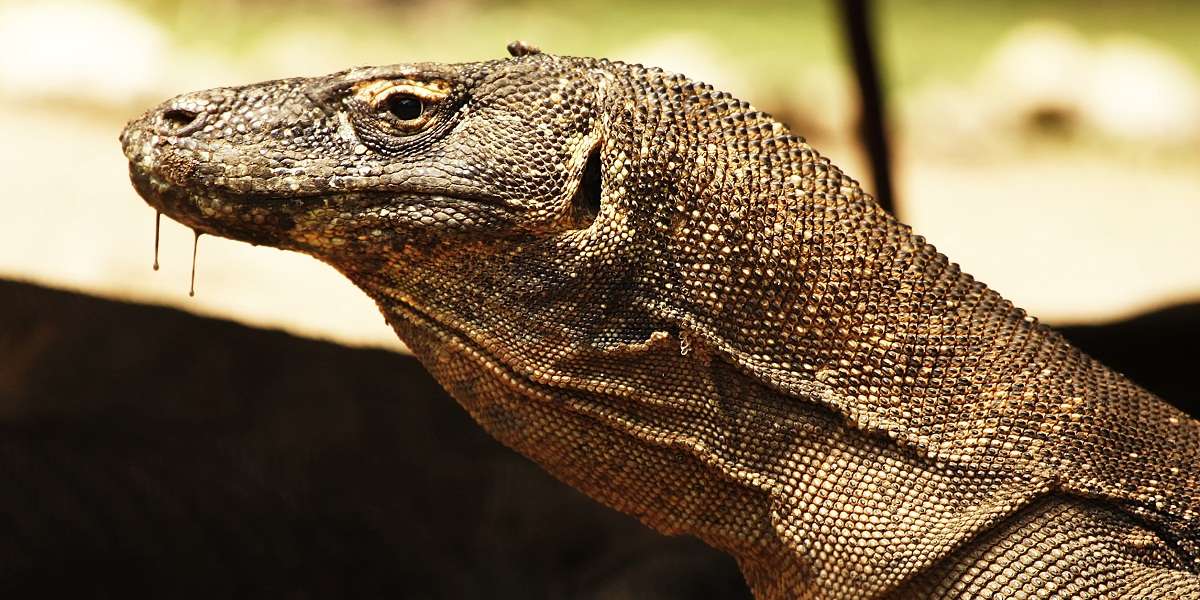
The 3 meter (10 ft), 100 kilogram (220 lb) Komodo dragon is the largest lizard in the world. It’s certainly deadly, but for years, scientists believed their powerful bite would instantly kill smaller prey, and that bacteria in their mouths would weaken larger prey with a deadly infection. As it turns out, your domestic cat has a stronger bite than a Komodo dragon, and the Komodos aren’t dirty—they’re venomous.
The Whole Bushel


First, a recap on the myths. Komodo dragons are massive lizards that are well known to be capable of taking down large prey like water buffalo. In 1969, American biologist Walter Auffenberg spent years living near and observing the Komodo dragons in their native habitats; later he published a book with his findings, including the idea that the mouths of the Komodo dragons contained so much bacteria that bite wounds would infect their prey with a very fast-moving infection. He determined this by watching the way they killed their prey; they would bite, and if the animal was too big to bring down in a single strike, it would wander off, grow gradually weaker and weaker, then collapse.
But the bacteria theory just isn’t true. With the help of three zoos in Los Angeles, Honolulu, and Houston, researchers at the UCLA School of Medicine examined samples of the saliva of Komodo dragons—and found nothing. There was no deadly bacteria in their mouths, and there were even fewer microbes than were found in the saliva of other carnivores, like the lion. There was bacteria found, but certainly nothing virulent and deadly, as would be necessitated by the mythos around the giant lizards.
But researchers at the University of Melbourne have also discovered that there is more going on than just biting when a Komodo brings down a giant piece of prey. The Komodo dragon has venom glands, and they produce a toxin that lowers blood pressure and essentially infects their target with a sort of hemophilia. With thinner blood, a neutralization of a clotting agent, and the massive bite wounds, an animal that’s been bitten simply bleeds out rather than dying from a foreign infection.
And that brings us to the second misconception about the way a Komodo dragon hunts. It’s often thought that they have powerful jaws—they’re successfully taking on prey that’s much larger than them, after all.
But that’s far from the truth, as researchers from Australia’s University of South Wales have found. The Komodo dragon actually has very low bite force—they compare it to the bite force generated by the common domestic cat.
What makes the Komodo’s bite so effective isn’t how strong it is, it’s how their jaws and skull are formed. Their skulls are actually very lightweight, made up of spongy, elastic bone. Much like a snake, the Komodo can open its mouth very, very wide to increase bite radius, allowing the maximum amount of damage to be done by their sharp, serrated teeth. The strong parts are in the Komodo’s neck; its massive neck muscles help control prey and maneuver the lizard’s head, allowing it to open massive wounds.
The huge bite radius, sharp teeth, and critical wounds, coupled with the blood-thinning venom, mean that the already large lizard can take down much larger prey by attacking quickly, administering fatal wounds, and then simply waiting for the prey to bleed out. It’s a method that minimizes contact with the prey and lowers any chances of the lizard getting hurt. It’s called “inertia killing,” and it’s now thought that perhaps it’s a method that large, carnivorous dinosaurs also used.
Show Me The Proof
National Geographic: The Myth of the Komodo Dragon’s Dirty Mouth
National Geographic: Komodo Dragon’s Bite Is ‘Weaker Than a House Cat’s’
CNN: Komodo dragons kill with venom, not bacteria, study says