In A Nutshell
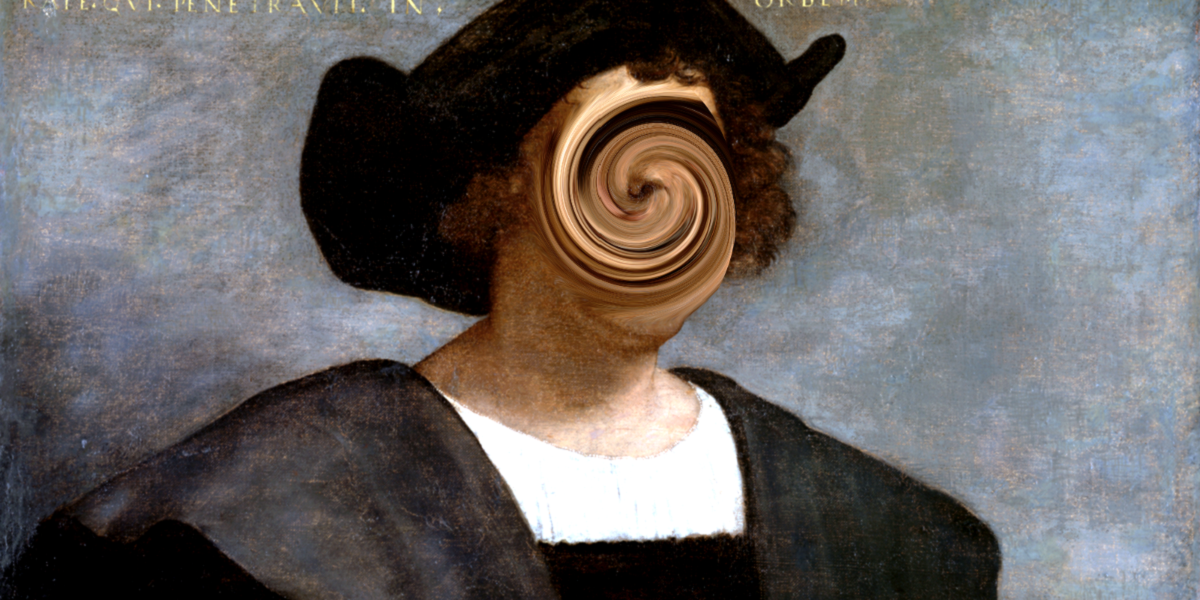
While there are many different portraits available of Christopher Columbus, all of them are simply the artist’s take on what they thought he looked like. Columbus, as far as history can tell us, never actually sat for a portrait. Some people speculate that one might have been requested by Queen Isabella during his time at her court, but no such portrait was ever found in her collection upon her death.
The Whole Bushel


Columbus is someone most people have some visual image of in their heads and for good reason. There are over 70 portraits of Columbus that have at one point been claimed as authentic by some artist or another. Many different people have tried to capture his likeness, but considering no historical records of any kind show evidence that he sat for a portrait, none are considered legitimate. Some people point out that with his fame, it seems unlikely that it never would have happened, but there are several reasons why Columbus might never have gotten around to it.
For starters, Columbus originally came from Genoa, Italy and the people there were unlikely to bother with that sort of thing at the time. In fact, in Genoa during those days art of that manner was usually used in churches and not really much of anywhere else. Some speculate that Columbus simply never would have thought of it. However, it is also important to note that while Columbus’s discovery was considered extremely important in later years, at the time he was basically a big, fat letdown. He was expected to bring back incredible riches and made many promises, but the royal court never really felt that he accomplished what he set out to do. It could be that he never had a portrait commissioned simply because he fell out of favor.
Now, in the portraits we do have, Columbus is portrayed in just about every manner imaginable. Some portraits have him much thinner or fatter than others; some imagine him with facial hair and all manner of hair colors. His complexion has been shown in many different skin tones as well. In fact, it seems the only thing the portraits seem to truly have in common is that he was a European male of some sort. However, history does have some written accounts that give us a clue as to the true visage of Columbus. One account states that he was light-skinned, but sometimes had a ruddy complexion, had a fairly average build, and somewhat sharp features with slightly high cheekbones. His hair was supposed to be blonde, but at a young age quickly changed entirely to white. Of course, no matter what face you put on him, he still changed the world.
Show Me The Proof
Looks Are Deceiving: The Portraits of Christopher Columbus
Christopher Columbus and the Bank of Saint George, by Henry Harrisse