In A Nutshell
The processes of making scotch, whiskey, and bourbon are very similar, but it’s only scotch if it’s made in Scotland, just like it’s only bourbon if it’s made in the United States. Whiskey and scotch guidelines allow for the alcohol to be aged in barrels other than the very specific charred white oak barrels used in bourbon production. And, to make things more complicated, whiskey spelled without the “e” is scotch.
The Whole Bushel

Scotch can only be called scotch if it’s made in Scotland. (But they might look at you funny if you go there and ask for it. There, it’s just whisky.)
The process of making scotch is very similar to the process of making whiskey, but there are a few key differences. Before it’s turned into mash and fermented, the barley is encouraged to start germinating. This is done by heating it over a peat fire, which also adds to the flavor of the finished product.
Different regions of Scotland are known for having a stronger or weaker peat flavor to their finished products. Scotch must be aged for at least three years in barrels that have already been used to age bourbon, wine, or sherry.
Making whiskey is done in much the same manner. Barley is malted (soaked, germinated, and dried) before it is ground into grist and mixed with hot water to form mash. The mash is filtered, fermented, and then distilled, with the final product collected and oftentimes mixed together before it’s divided into barrels for maturation.
There’s Irish whiskey, American whiskey, and Tennessee whiskey. Tennessee whiskey is different as it undergoes a process in which it is filtered through sugar maple charcoal to impart a unique taste. Thanks to the years lost to Prohibition, American whiskey distillers can’t boast the continuous long lineage that Irish distillers can.
And what about bourbon? All bourbon is whiskey, but what makes it bourbon? Bourbon is only made in the United States. The base mixture it’s distilled from (mash) must contain at least 51 percent corn, and by the end of the process it must be less than 160 proof.
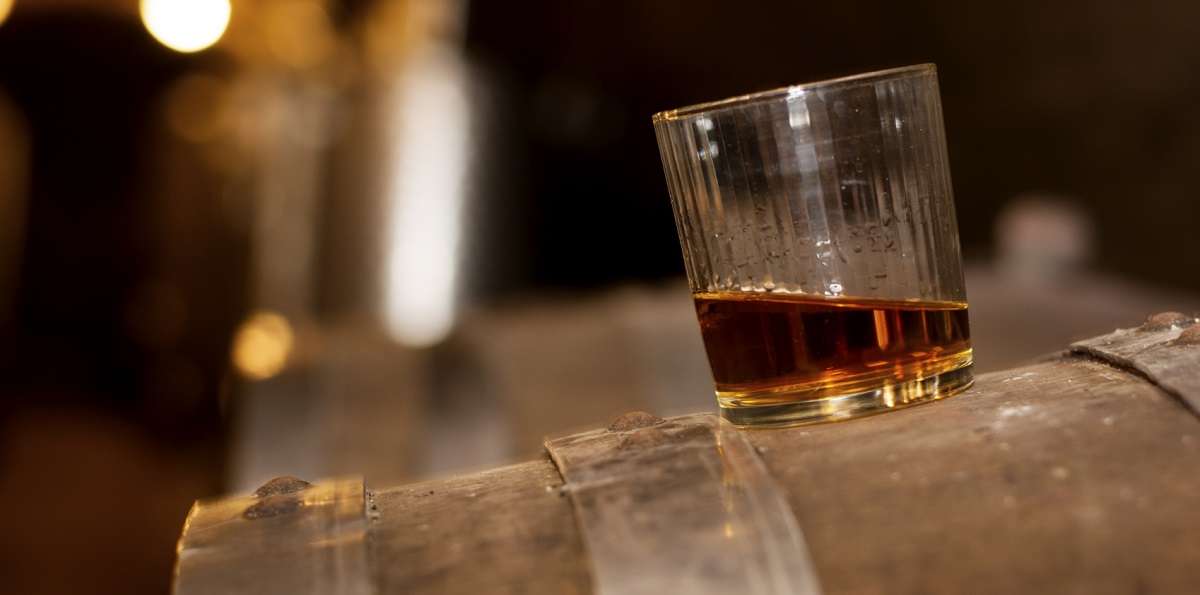
Perhaps most importantly is how it’s aged. Bourbon has to age for a minimum of two years, and unlike other types of liquor (that rely on used barrels to impart some distinctive flavors), bourbon is aged in new, charred barrels made from white oak. When the oak barrels are used once, they can’t be used again to produce bourbon, although they’re often shipped off to distilleries for use in aging whiskey or scotch. And, of course, if it’s not made in Kentucky, it can’t be Kentucky bourbon.
So what accounts for the wide variety of subtle (and not-so-subtle) flavors and notes present in all three? Studies by researcher Tom Collins (seriously, we didn’t make that up) at the University of California, Davis, have shown that there are literally thousands of different chemical compounds that can appear in a single glass of scotch, bourbon, or whiskey. How they’re aged and what they’re distilled from leaves a very distinct chemical profile that has allowed researchers to tell exactly what the liquid is just by looking at its chemical profile. Different blends have different compounds, such as tannins and fatty acids, unique to them.
To use an “e” or not to use an “e”? While “whiskey” is often used to refer to the product of Ireland and America, “whisky” is used to refer to scotch whisky. Some distilleries—like George Dickel, of Tennessee—sometimes drop the “e” in order to imply that their beverage is of the same caliber as the original scotch whisky.
Show Me The Proof
Ardbeg: Fantastic Formulas and Peaty Potions
Malts.com: The Art of Making Whisky; Understanding Scotch Whisky
Jim Beam: Bourbon vs. Whiskey
Smithsonian: How Chemistry Can Explain the Difference Between Bourbon and a Tennessee Whiskey