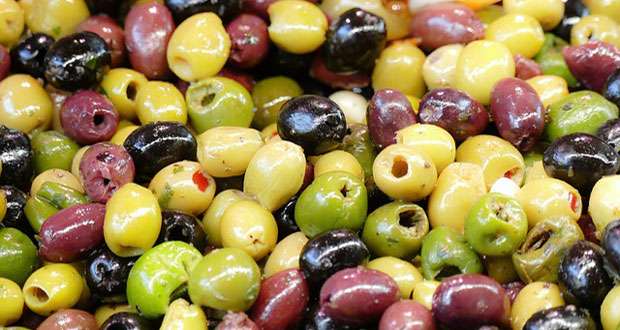
The olive tree is one of the oldest known trees to be cultivated for their fruit, originally being harvested in Asia Minor over 6,000 years ago. As olives became frequently harvested, they ended up becoming the staple of the Mediterranean diet and are still a popular choice among the Greeks today. Unlike apples, which are classified as being different varieties, green and black olives are just that, olives. They can be eaten plain, be pickled, get stuffed, or even be used as a garnish on alcoholic drinks. Which type you use is dependent on the taste you are going for, as green and black olives do have some minor differences. Here is what you need to know about green and black olives.
Green vs Black Olives: How They Are Picked and Preserved
The main difference between green and black olives is how they are picked and preserved during harvest season. Green olives are harvested from the tree before they have a chance to ripen and are then brined in a lye solution which is what makes them edible. Due to being harvested prior to being ripe, green olives have a concentrated bitter taste and feel a lot denser to eat. They also tend to be a lot moister because the marinating process of the lye solution leaves a lot of oil within them. This makes them great to eat alone, filled with cheeses or peppers, or used as a garnish on other dishes. It is also important to note that green olives will be a lot saltier than their black counterparts. Common Greek green olives include Halkidiki and Ionian, with Halkidiki being an excellent option for salads and Ionian being great for appetizers as they are sweeter than Halkidiki olives.


Black olives, on the other hand, are picked after they have ripened. Due to being on the tree branch longer, black olives are softer and less dense than their green counterparts. Similarly to green olives, they do need to be brined and marinated, however, they end up coming out drier than green olives and with less flavor. These properties make them perfect for adding to bread, meats, and pasta.
During the marinating process, green olives are soaked in lye and then will be fermented in brine for anywhere between six and twelve months, whereas, black olives are also soaked in lye but then they get cured in brine which is what reduces the bitterness. The longer an olive is soaked in the lye solution, the less bitter it becomes. For those who do not like very bitter olives, choose to buy oxidized black olives, which are typically canned, as these will be the mildest. If you can only find oxidized green olives, generally they will also be mild in taste as well.
Are They Nutritionally Different?
When it comes to the nutritional makeup of the two, there are no major differences. Both olives will contain healthy fats and minerals like iron and both are rich in antioxidants and vitamin E. Beyond this, both types of olives are rich in good monounsaturated fats, polyphenols, flavonoids, and have anti-inflammatory benefits. The only major difference with regards to nutrition is that green olives will be saltier as they contain a higher concentration of sodium due to the preparation method.
If you choose to buy olives, make sure to store them at room temperature. This will allow them to be kept up to two years, however, if you have opened olives than they need to be refrigerated in a non-metal container within their own liquid. Opened olives will keep in the refrigerator for several weeks. Other than this, look out for the following popular varieties: Lugano, Sevillano, Liguria, Ponentine, Kalamata, Manzanilla, and Picholine.